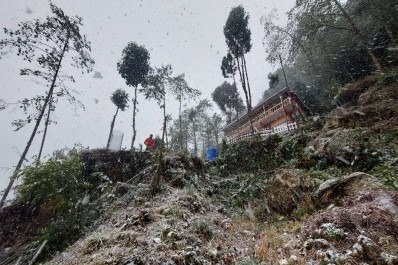

I can still recall the first thing that caught my attention as I arrived in Dawaipani. The silence. Not the empty kind, but the comforting kind. The kind that makes you breathe a little deeper without even realising it.
Dawaipani is a small hill station nestled quietly in the Eastern Himalayas. For some reason, it has remained untouched by the crowds and commercialisation of tourism. It is situated just above the Lebong Valley and far away from the bustling streets of Darjeeling, giving it the feel of a place that moves at its own rhythm. It is a common practice for locals and tourists alike to refer to Dawaipani as the “Village of Silence,” and, to be frank, the name suits it perfectly.
No one visits Dawaipani for its luxury hotels and bustling tourist attractions. I certainly did not. I visited Dawaipani because I needed space. Time. And an opportunity to live in harmony with nature, even if it was only for a short while. Homestays in Dawaipani are not about visiting more places. It is about learning to live in a world where it is perfectly fine to do less.
What I found most interesting about Dawaipani is that it lies exactly opposite Darjeeling. In the daytime, if you observe carefully, Darjeeling appears to be congested and concrete-dominated. However, at night, when the entire town lights up in the valley below, it appears beautiful in its own way. Observing this contrast from such a peaceful village made me value both places in different ways.
To fully experience Dawaipani, selecting the right homestay plays a very important role. A good homestay in Dawaipani will provide you with foggy mornings, homely home-cooked meals, and people treating you like their own family. Since this is still a relatively unexplored destination, it is always a good idea to plan your trip to Dawaipani well in advance. This will help you get the best homestay in Dawaipani that suits your travel style and budget.
Why Dawaipani Felt Like the Perfect Peaceful Getaway
Darjeeling is always synonymous with congested roads, traffic, and noise. Dawaipani, with an altitude of 6,500 feet, is the complete opposite.
There are no shopping malls in this place. No skyscraping hotels. No need to hurry. Just cloud movement, pine trees, and fresh mountain air that will automatically make you slow down.
The origin of the name “Dawaipani” is based on medicinal water. It is said that there was a time when a spring existed in this place, and its water possessed healing properties. The spring is not easy to locate now, but after a few days in this place, I realized that it is the air that has the healing properties. I felt refreshed, lighter, and more relaxed without doing anything out of the ordinary.
The rhythm of life here is the rhythm of the sun and the weather, not the clock. Days begin with the chirping of birds. Afternoons are quiet. Evenings come softly. The breeze in the trees and the quietness of the place calm your mind slowly.
I also observed that many people come here now to work remotely. During my stay, the mobile internet connection was quite stable. Being in a Zoom meeting with Kanchenjunga behind me is definitely a thing that I never thought I would experience, but it is a memory that I will always treasure.
It was the homestay experience that made my stay here truly special. I was not treated like a guest who checks in and checks out. I was treated like someone who belonged there, even if only for a little while.
Best Nature Experiences I Loved in Dawaipani
1. Waking Up to Misty Mountain Mornings
Mornings in Dawaipani are nothing short of magic.
I didn’t need any alarm clocks or wake-up calls. The dawn broke gently, with a thick layer of mist in the village. As the sun rose, there were gentle hues in the sky, and the snow-capped Himalayas slowly came into view.
Unlike Darjeeling, I didn’t have to wake up early to head to Tiger Hill. All I had to do was draw back the curtains. Sitting on the balcony of the homestay, sipping hot tea, was almost meditative. The birds took over soon after.
2. A 180-Degree View of Kanchenjunga
One of the reasons I picked what the locals call the best homestay in Dawaipani was the view. And it did not disappoint.
Kanchenjunga appeared unbelievably close, towering right outside my window. When the first rays of sunlight hit the snow-capped peaks, the mountain turned golden. On clear days, the panorama included the entire Himalayas, from Nepal to Bhutan, in one shot.
In winter, especially towards the end of December, the mountains remained visible for almost the entire day. Compared to Darjeeling, the view from Dawaipani seemed broader and more expansive. Jorethang and Namchi in Sikkim, dotted with hills, lay at the foothills of the mountains.
3. Forest Walks, Nature Trails, and Bird Watching
The life of Dawaipani is slow, and the best way to experience it is by walking.
There are a number of nature trails in and around the village, which pass through pine, oak, and rhododendron forests. These nature walks were like open classrooms for anyone who loves nature.
Dawaipani is close to the Senchal Wildlife Sanctuary, and this makes it a dream destination for any bird watcher. Through my simple binoculars, I was able to spot birds such as the Fire-tailed Sunbird, Rufous-bellied Niltava, and Himalayan Bulbul.
Even without bird-watching, these nature walks proved to be a refreshing experience for both my body and mind. The sounds of birds, the sight of butterflies, and the silence of the mountains stayed with me long after the walks were over.
4. Quiet, Thoughtful Sunsets
Sunsets are not dramatic here. They are gentle.
As the sun slowly sets behind the hills, the village is bathed in a warm orange glow. The colours of the sky change slowly, and all is quiet. Such moments do not ask for a photograph. They ask for your presence.
5. Stargazing and Darjeeling’s Night Lights
But in the night, Dawaipani surprised me once again.
The sky was full of stars, more than I had seen in a long time. It was as if diamonds were scattered all over the sky. On the other side of the valley, the lights of Darjeeling shone with a soft twinkle, as if stars were resting on the hills.
What I Saw Around Dawaipani
6. Pine and Cypress Forests
The pine and cypress forests surround the village. It was very soothing to walk through the forests and listen to the chirping of birds and feel the cool breeze.
7. Step Farming on Hill Slopes
The people of the village practice step farming on the hills. I could see cardamom plants and squash farms all around. The homestays use vegetables grown in the same village, and that makes every meal feel so fresh and genuine.
8. Dawaipani View Point
This is a peaceful spot with panoramic views of the hills and valleys. The best time to visit this spot is during sunrise and sunset hours when the light is soft and beautiful.
Things I Did Near My Dawaipani Homestay
9. Time with Local Families, Home-Cooked Food, and Village Walks
There is no need to do much in Dawaipani. Just walk, sit, talk, and observe.
Homestays in Dawaipani are all about living like locals. Tea talks, stories of the village, and understanding the hill culture are some of the things that I enjoyed the most.
The food was simple but very satisfying. Rice, dal, vegetables, and local recipes were all very nourishing in their own way, unlike the food in the cities.
10. A Day Trip to Lamahatta, Takdah, and Tinchuley
Lamahatta is only 10-12 km away from Dawaipani. The gardens and the hilltop lake of Lamahatta are very peaceful and easy to explore. Takdah, famous for its old British bungalows and orchid museum, and Tinchuley, famous for its sunrise point and tea gardens, can all be explored in a day trip from Dawaipani.
Want to Experience Dawaipani the Slow Way?
If reading this made you picture misty mornings, quiet walks, and simple hill life, you’re already halfway there.
For help with homestay options, travel planning, or figuring out the right time to visit, you can reach out to Addahut.
They know Dawaipani beyond maps and checklists.
👉 Talk to Addahut About Your Dawaipani Trip
Frequently Asked Questions (From My Experience)
Q1: Is there a market in Dawaipani?
No, there is no proper market. For essentials or medicines, you’ll need to go to Jorebungalow or Darjeeling.
Q2: Is there Wi-Fi in Dawaipani homestays?
Most of the homestays offer Wi-Fi. Since it is a remote area, it’s best to carry a Jio or Airtel SIM as backup.
Q3: Can I take my own car to Dawaipani?
Yes, but the last 2–3 km of the road is steep and unpaved (boulder road). A high-clearance vehicle like an SUV or Bolero is strongly recommended.
Q4: What is the best time to visit Dawaipani?
From my experience, October to April is the most comfortable. Winter mornings can be cold, but the mountain views are clearer. Monsoon has its own charm, but fog and slippery roads can slow you down.
Q5: Is Dawaipani suitable for solo travelers, especially women?
Yes. I felt safe throughout my stay. The village is quiet, people know each other, and homestay hosts are genuinely caring. Just basic hill-travel common sense is enough.
Q6: How many days are ideal for staying in Dawaipani?
At least 2 nights. I stayed longer than planned because there’s nothing urgent to “see,” but a lot to feel. Three to four days is perfect if you want to slow down.
Q7: Are there restaurants or cafés in Dawaipani?
No proper cafés or restaurants. Meals are usually prepared by the homestay. Honestly, that turned out to be one of the best parts of the trip.
Q8: What should I pack for Dawaipani?
Warm layers, even in summer. Comfortable walking shoes, basic medicines, cash, and a power bank. Nights get quiet and cold faster than you expect.
Q9: Is Dawaipani good for work-from-mountains or digital nomads?
Yes, if you’re okay with a slower internet speed. I managed emails and light work, but video calls depend on the weather and network. It’s better for focused work than constant meetings.
Q10: Is Dawaipani good for families or elderly travellers?
It can be, as long as mobility isn’t an issue. The steep roads and lack of markets may be inconvenient, but the peaceful environment is great for relaxed stays.